How Stem Cell Therapy Could Shape the Future of Recovery
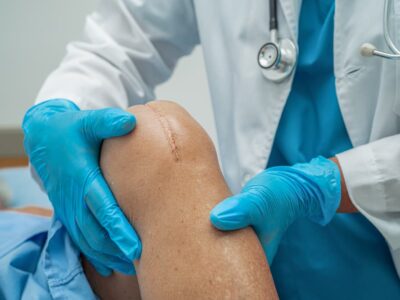
Recovery has never been a single, tidy concept in medicine. For one patient, it means regaining enough shoulder motion to return to work after a rotator cuff injury. For another, it means walking independently after a stroke, or reducing the daily burden of chronic inflammation, nerve damage, or degenerative joint disease. The harder truth is that recovery often stalls because the body does not rebuild damaged tissue as efficiently as patients and clinicians hope. Scar tissue forms. Inflammation lingers. Nerves regenerate slowly, if at all. Cartilage wears down and rarely restores itself in any meaningful way.
That gap between healing and full restoration is where Stem Cell Therapy attracts so much attention. The promise is not mystical, and it should not be marketed as one. At its most grounded, stem cell-based treatment is about supporting repair in tissue that struggles to heal on its own. It is part biology, part regenerative medicine, and part careful clinical judgment. The excitement surrounding it is real, but so are the limits, the unknowns, and the uneven quality of what is currently available.
What matters now is not hype. It is understanding how this field may change the future of recovery, where it already shows potential, and where caution is still warranted.
Why recovery medicine needs new tools
Traditional medicine is remarkably good at stabilization. Surgeons can repair torn structures, replace joints, remove diseased tissue, and restore blood flow. Rehabilitation specialists can guide movement, rebuild strength, and help the nervous system adapt. Pain medicine can reduce suffering, at least to a degree. Yet many of these strategies manage damage more effectively than they reverse it.
Take orthopedic injuries as an example. A tendon can be reattached, but the repaired tissue may never regain its original quality. Cartilage defects often become a long-term problem because cartilage has poor blood supply and limited capacity for self-repair. In neurology, the challenge is even greater. After spinal cord injury or stroke, the body’s natural regenerative response is weak and often chaotic. The result is that patients improve, then plateau, even with disciplined therapy.
That is why regenerative approaches matter. They aim to improve the biological environment of healing itself. Instead of only controlling symptoms or mechanically repairing structures, they try to influence how tissue rebuilds. Stem Cell Therapy sits squarely in that ambition.
What stem cells actually do, and what they do not do
The public conversation often treats stem cells as if they were tiny miracle workers that can transform into anything, go anywhere, and rebuild whatever is broken. That is an oversimplification, and at times a dangerous one.
Stem cells are valuable because of two broad properties. First, some can develop into specialized cell types under the right conditions. Second, and in many current treatments perhaps more important, they release signaling molecules that affect inflammation, tissue repair, blood vessel formation, and the behavior of nearby cells. In real clinical settings, this second role, often called a paracrine effect, may be doing much of the heavy lifting.
Different stem cells have different capabilities. Hematopoietic stem cells, for instance, have long been used in bone marrow transplantation for blood disorders and certain cancers. Mesenchymal stromal or stem-like cells, often sourced from bone marrow or adipose tissue, are the ones most commonly discussed in musculoskeletal and regenerative applications. Research is also advancing with induced pluripotent stem cells and embryonic stem cells, though those are associated with more complex ethical, regulatory, and safety considerations.
The distinction matters because the future of recovery will likely depend less on one universal stem cell product and more on matching the right cell type, dose, delivery method, and timing to the right injury. Biology is rarely generous to one-size-fits-all thinking.
Where Stem Cell Therapy is already influencing recovery conversations
Some of the most serious discussion around Stem Cell Therapy is happening in fields where healing is slow and conventional treatments leave meaningful gaps.
In orthopedics and sports medicine, clinicians are exploring stem cell-based approaches for osteoarthritis, tendon injuries, cartilage defects, and bone healing. The attraction is obvious. Many patients are too young for joint replacement, too active to accept long-term decline, or simply trying to avoid surgery if a less invasive option has a credible chance of helping. In practice, however, outcomes are mixed. Some patients report meaningful pain reduction and improved function. Others see little change. That variation reflects the underlying complexity of both the injuries and the treatment methods.
Neurology is another area of intense interest. Stroke recovery, spinal cord injury, multiple sclerosis, and neurodegenerative disorders all involve tissue damage that the body repairs poorly. Early-stage studies have explored whether stem cells might reduce inflammation, protect surviving neurons, or support neural rewiring. These are difficult conditions in which even modest gains matter. If a patient regains hand function, bladder control, speech clarity, or safer balance, that is not a marginal improvement. It can change daily life. Still, the field remains early for many neurological uses, and many interventions are investigational rather than established care.
Cardiac recovery may also benefit. After a heart attack, dead muscle is replaced with scar tissue, and the heart often becomes less efficient over time. Researchers have studied whether stem cell-based therapies can improve heart function by supporting blood vessel growth or preserving viable tissue. Results so far have been uneven, but the question remains important because even small functional gains in heart failure recovery can have substantial clinical value.
Wound care offers perhaps one of the most intuitive use cases. Chronic ulcers, radiation injury, and complex surgical wounds often fail to heal because inflammation persists and blood flow is impaired. In those settings, regenerative therapies may help shift tissue out of a stagnant state and back into active repair. If future protocols become more standardized, this could become one of the more practical and impactful recovery applications.
Recovery is not just about replacing cells
One of the biggest misconceptions in this space is the idea that recovery depends on dropping new cells into damaged tissue and waiting for them to become whatever is missing. The reality is more subtle and, in some ways, more interesting.
Healing depends on timing, mechanical load, blood supply, inflammatory signaling, scar formation, and rehabilitation. A biologic treatment can be technically sound and still underperform if it is delivered into an environment that is hostile to repair. That is why the future of Stem Cell Therapy is likely to be intertwined with broader recovery protocols rather than stand alone as an isolated procedure.
A knee with advanced bone-on-bone arthritis, severe malalignment, and years of inflammatory degeneration is different from a relatively localized cartilage lesion in a younger patient. A partially torn tendon with good structural continuity is different from a chronic tendon that has retracted and degenerated. In one case, a regenerative approach may support useful healing. In another, surgery or mechanical correction may still be the more honest recommendation.
Clinicians who work responsibly in this area tend to speak less like salespeople and more like risk managers. They ask where the tissue is on the damage spectrum, whether the diagnosis is precise, what prior treatments have been tried, and whether the patient can commit to rehab afterward. Those details often determine whether a biologic treatment has a fair chance.
The importance of source, preparation, and delivery
Not all stem cell interventions are remotely equivalent. This is one of the least appreciated facts among patients and one of the most important.
A treatment derived from bone marrow aspirate concentrate is not identical to one based on culture-expanded cells. A same-day procedure using minimally processed tissue is different from a laboratory-manufactured cellular product. Adipose-derived material may behave differently from bone marrow-derived material. The concentration of cells, the presence of other bioactive components, the handling process, and the injection technique all matter. So does image guidance. Placing a biologic precisely into a damaged tendon or joint compartment is not a trivial technical detail.
Even in clinics with good intent, variability can be substantial. Two patients may hear they are receiving Stem Cell Therapy, yet the actual biological content and clinical rationale may differ dramatically. That inconsistency is one reason published results can be difficult to compare and why patient expectations often become disconnected from evidence.
If this field is going to shape the future of recovery in a durable way, it will need more standardization. Not just better products, but clearer protocols, cleaner study design, and tighter alignment between diagnosis and treatment.
Where the evidence is strongest, and where it is still thin
It is easy to find sweeping claims online. It is much harder to find careful interpretation of the evidence.
The longest and most established stem cell use in medicine is hematopoietic stem cell transplantation. That is standard medical practice in selected blood cancers and serious hematologic diseases. It matters because it shows stem cell medicine is not theoretical. It has been changing outcomes for decades.
The regenerative side of Stem Cell Therapy is newer and less settled. In orthopedic applications, evidence suggests potential benefit for some patients with mild to moderate osteoarthritis, focal cartilage injury, and certain tendon conditions, but the magnitude and reliability of benefit are still being defined. Results are often stronger for pain and function than for proven structural regeneration on imaging. That distinction is important. Feeling better matters, but it is not always the same as rebuilding tissue.
For neurological recovery, there is promise, especially in early safety studies and selected functional outcomes, but robust proof remains limited for many indications. The same is true in cardiology and autoimmune disease, where the science is moving, but broad clinical adoption still requires stronger data.
A sensible way to view the current landscape is this:
- Established for some blood and immune system disorders
- Promising but still variable in orthopedic and sports medicine recovery
- Investigational for many neurological, cardiac, and degenerative conditions
- Highly dependent on patient selection, protocol quality, and follow-up rehab
- Vulnerable to overpromising when commercial interests outpace evidence
That may sound restrained, but restraint is exactly what keeps an emerging therapy credible.
What the next decade may change
The future of Stem Cell Therapy will likely be defined by refinement rather than spectacle. Better science tends to move that way. The biggest gains may come from solving practical questions that sound small but are actually decisive.
Timing is one. Delivering regenerative therapy too early may intensify inflammation in unhelpful ways. Too late, and the tissue architecture may already be too degraded. Dose is another. More cells do not automatically mean better outcomes. The surrounding microenvironment may matter more than raw quantity. Combination therapy is also likely to grow. Stem cell-based interventions may work best alongside platelet-rich plasma, scaffolds, growth factors, physical therapy, or surgical procedures that create a better repair environment.
Researchers are also exploring off-the-shelf allogeneic cell products, engineered cell lines, exosomes, and bioactive matrices that may provide some of the regenerative signaling benefits without requiring individualized harvesting each time. If those products prove safe, effective, and scalable, they could make recovery-focused regenerative care more accessible and more consistent.
Manufacturing quality will be another turning point. A future in which stem cell therapies are carefully characterized, reproducible, and regulated like serious biologic medicines is very different from the current patchwork market. That transition, while slower and more expensive, is probably necessary if the field is going to mature.
The patient experience often looks less dramatic than marketing suggests
Patients usually imagine a dramatic before-and-after moment. In real life, recovery from Stem Cell Therapy tends to unfold gradually, if it helps at all. The first days may involve soreness at the harvest or injection site. Improvement, when it comes, may appear over weeks or months, often in combination with structured rehabilitation. Some people notice reduced pain before they notice meaningful gains in strength or movement. Others improve in daily function even while imaging shows only modest tissue change.
That slower pace is not a flaw. Biology rebuilds at its own speed. The problem is expectation. If someone is told that a single injection will regrow cartilage, erase years of degeneration, and avoid surgery forever, disappointment is almost guaranteed.
The better framing is that regenerative therapy may improve the odds of better healing in selected cases. It may reduce symptoms, support function, or delay more invasive treatment. For some patients, that is enough. A fifty-year-old recreational runner with a focal knee issue may care deeply about buying three to five better years of activity. A manual laborer with a chronic tendon problem may value returning to work without surgery. Recovery is personal, and success should be measured that way.
Risks, blind spots, and ethical pressure points
https://www.google.com/maps?cid=7578500276047542803Stem Cell Therapy is often described as minimally invasive, which can be true, but minimally invasive does not mean risk free. Infection, bleeding, procedural pain, failed response, and worsening inflammation are real possibilities. Depending on the product and how it is handled, there can also be concerns about contamination, abnormal tissue growth, or unforeseen immune effects. Some of the more serious theoretical risks are rare, but that does not make them irrelevant.
There is also an ethical problem that experienced clinicians recognize quickly. Patients seeking regenerative treatments are often vulnerable. They may have chronic pain, limited options, and a strong desire to avoid surgery or disability. That makes them easy targets for overstated claims. The phrase stem cell has commercial power far beyond what current evidence supports in many settings.
Anyone considering treatment should be able to get clear answers to a short set of questions:
- What exact cells or tissue product are being used?
- Is this approach standard care, off-label use, or part of a clinical trial?
- What evidence supports it for my specific condition?
- What result is realistic, symptom relief, tissue healing, or both?
- What happens if it does not work?
A clinic that cannot answer those questions plainly is asking for trust it has not earned.
The role of rehabilitation will only grow
One of the most encouraging developments in recovery medicine is the growing recognition that biologic treatment and rehabilitation should not operate in separate silos. This matters because stem cell-based interventions do not replace the principles of recovery. They may enhance them.
A repaired tendon still needs progressive loading. A healing joint still benefits from strength, mobility, and neuromuscular retraining. A nervous system trying to recover still needs repeated, purposeful practice. In many cases, Stem Cell Therapy may create a better biological window for rehab to work, but rehab is still the process that converts biological potential into usable function.
This is especially important in sports medicine. Athletes often focus on the procedure because it sounds decisive. In reality, post-procedure load management often determines whether the treatment succeeds. Return too soon and the healing tissue may fail. Underload the area for too long and the tissue may not organize well. The same principle applies in less dramatic settings, from post-surgical recovery to chronic joint pain in older adults.
The clinics likely to deliver the best results over time are not those that offer the flashiest intervention. They are the ones that integrate imaging, diagnosis, procedure skill, rehab planning, and honest follow-up.
What a realistic future looks like
The most plausible future is not one in which Stem Cell Therapy replaces surgery, drugs, or physical therapy. It is one in which recovery becomes more layered and more precise. Some injuries will still need mechanical repair. Some diseases will still require medication. Some patients will still do best with structured rehab alone. But regenerative therapies may increasingly fill the space between symptom management and major intervention.
That could mean slowing osteoarthritis progression in selected patients. It could mean improving tendon healing after repair, reducing fibrosis after injury, or making stroke rehabilitation more productive during critical windows of recovery. It may also mean treatments that are more personalized, not in the vague marketing sense, but in the practical medical sense of matching a biologic strategy to tissue type, injury stage, age, and recovery goals.
There is a quiet but important shift happening in medicine. Recovery is no longer seen only as rest followed by rehabilitation. It is becoming a biologically active phase that can potentially be influenced, supported, and optimized. Stem Cell Therapy is part of that shift, and perhaps one of its most visible expressions.
For patients, that future should inspire measured optimism. For clinicians, it demands discipline. The science is promising enough to take seriously and incomplete enough to discuss carefully. That balance may not generate the loudest headlines, but it is how useful medicine is built.
The future of recovery will belong to treatments that do more than sound advanced. They will need to prove that they help real people regain real function, under real clinical conditions, with results that last. Stem Cell Therapy has not yet answered every question put before it. Still, it has already changed the conversation from managing damage to participating in repair. That alone is significant, and if the field matures with rigor, it may prove to be far more than a passing fascination.
Denver Regenerative Medicine | Stem Cell Therapy, HRT, Testosterone Clinic
Address: 5040 Corporate Plaza Dr Ste 7, Colorado Springs, CO 80919
Phone number: +17205831648
FAQ About Stem Cell Therapy
What are the negative side effects of stem cell therapy?
Stem cell therapy can cause mild short-term reactions like injection-site pain, fatigue, and low-grade fever. More serious risks include infection, immune system rejection, blood clots, unintended tissue growth or tumors, and severe complications from unproven treatments at unregulated clinics.
What diseases can stem cells cure?
Currently, stem cells routinely and effectively cure specific blood cancers, immune deficiencies, and blood disorders using established bone marrow or cord blood transplants. Most other applications—such as for Parkinson's, diabetes, or heart failure—remain experimental or in clinical trials rather than proven cures.
Do stem cell treatments really work?
Yes, stem cell treatments work, but only for a very specific group of conditions. Hematopoietic stem cell transplants (bone marrow transplants) are fully proven and widely used to treat blood cancers like leukemia and lymphoma. However, commercial stem cell treatments for joint pain, arthritis, and wrinkles are largely unproven, experimental, and costly.